TPO Roofing for Flat & Low-Slope Manufactured Homes
A heat-welded single-ply membrane that turns your roof into one continuous, sealed surface — bright white, built for water that sits, and light enough to go straight over the roof you already have.
Heat-Welded SeamsReflective White SurfaceIdeal for Roof-Overs
Get Your Free TPO Roof Assessment
No pressure, no obligation — we’ll call you back the same day.
What It Solves
The Four Problems a TPO Roof Ends
Flat and low-slope manufactured home roofs fail in predictable ways. Every one of them traces back to the same root cause: a surface made of pieces instead of one sealed sheet.
Water That Sits, Not Runs
A low-slope roof ponds after every Florida downpour. Standing water finds every glued lap and every caulked joint, and then it waits. TPO is built to live with water on it.
A Roof That Cooks the House
On a manufactured home the roof sits right above your ceiling — no deep attic to buffer it. A dark, aged surface absorbs heat all day and your A/C pays for it all night.
Seams That Eventually Let Go
Rolled roofing, coatings and tapes all rely on adhesive to hold a lap together. Adhesive ages, dries and lifts at the corner. Welded seams have nothing to dry out.
The Annual Patch Cycle
Another summer, another tube of sealant, another stain on the ceiling. Chasing leaks costs more over ten years than replacing the surface that keeps producing them.
How It Works
One Sheet, Welded Into One Roof
TPO stands for thermoplastic polyolefin — a single-ply roofing membrane that arrives in wide rolls and goes down as one engineered layer rather than hundreds of overlapping pieces. That single difference is why it belongs on flat and low-slope manufactured home roofs.
The work starts below the surface. We inspect the existing deck, replace anything soft or rotted, and correct fasteners that have pulled through — because no membrane can outperform what it’s fastened to. On top of that we set an even, approved substrate so the finished roof reads flat and drains the way it’s supposed to.
Then the membrane is rolled out and either mechanically fastened or adhered, laid so the sheets run with the water rather than against it.
Where two sheets meet, we don’t glue them — we weld them. A hot-air welder melts the overlapping edges and a roller fuses them, so the lap becomes the same continuous piece of material as the rest of the roof. There’s no adhesive to dry out, no tape to lift at a corner, and no directional seam for wind to get under.
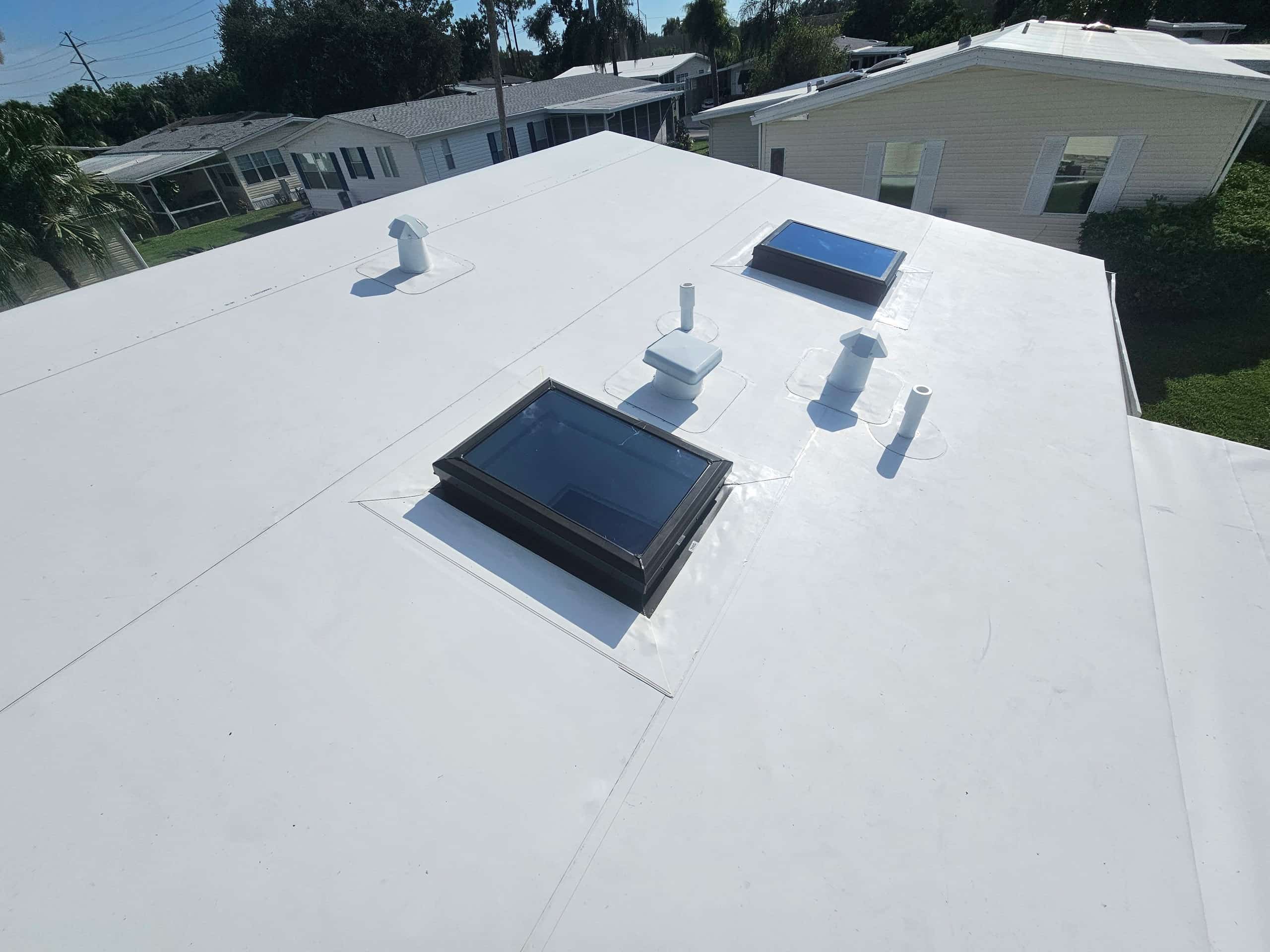
Every penetration gets the same treatment. Plumbing vents, A/C curbs, skylights and the perimeter edge metal are all flashed with the same membrane and welded into the field — not sealed with caulk and hoped over.
Inside a Bismarck TPO Install
What actually happens on your roof, in order — and what we hand you at the end.
Full deck inspection: soft spots, rot and fastener pull-through repaired before anything goes down
An even, approved substrate so the finished surface drains instead of dishing
Membrane mechanically fastened or adhered to manufactured-home spec
Hot-air welded seams — every lap fused, not glued
Welded flashings at vents, A/C curbs, skylights and every penetration
Perimeter edge metal and terminations detailed for wind
Every seam probed by hand before we call it finished
Photo documentation, a magnetic nail sweep, and your paperwork in hand
Why This System
What You Actually Get Out of It
Four reasons TPO has become the default answer for flat and low-slope manufactured home roofs in Florida.
Reflective by Design
The bright white surface sends a large share of the sun's energy back off the roof instead of letting it load into the home — which shows up on the cooling side of your power bill.
Welded Into One Piece
Heat-welded laps make the seams as strong as the membrane itself. Nothing to dry out, nothing to peel, nothing to re-caulk every spring.
Built for Water That Sits
Ponding and driving rain are what this membrane was made for — along with the relentless UV that breaks down cheaper low-slope surfaces.
Light Enough to Roof Over
A single-ply membrane adds very little weight, which makes TPO one of the two systems we reach for when a roof-over is the smarter path.
If you’re on your third summer of sealant and stains, the surface is telling you something. We’ll get on the roof, show you photos of what’s actually happening up there, and give you a straight answer — free.
Heat, travel speed and roller pressure have to be right for the day's conditions. Get it wrong and the seam looks perfect and fails anyway.
We probe the seams before we leave
Every lap gets checked by hand. A weld you haven't tested is a weld you're guessing about.
Manufactured-home details, done for manufactured homes
Vent boots, A/C stands, marriage lines and edge metal on a light structure — these are the details that separate a roof that lasts from one that leaks at year three.
Deal direct with the owner-operator
No salesmen, no middlemen. The person who quotes your roof is the one responsible for building it.
“We treat your home like our own.” — The Bismarck family promise · Florida grown, family owned
A simple, transparent process — you’ll know exactly what’s happening at every step.
01
Free Assessment
We get on the roof, check the deck and drainage, photograph the problem areas, and tell you whether TPO is genuinely the right system for your home.
02
Straight Quote
A clear written estimate covering deck repairs, substrate, membrane and flashings — no hidden line items. Ask about current warranty options while we’re there.
03
Weld & Flash
Deck repairs, substrate, membrane, welded seams and welded penetration flashings — most manufactured home roofs are done in 1–2 days.
04
Probe, Walk & Clean
Every seam probed, a walkthrough together with photos, magnetic nail sweep of the yard and drive, and your paperwork in hand.
“From start to finish Scott and crew were top notch! From the very start Scott walked us through the process to the finish. Crew was great, cleaned up after. Thanks Scott!”
Ron · Venice, Florida ★★★★★
Licensed, Bonded & Insured
FL Lic. # CCC1336896 — verifiable before you sign anything.
25 years, one specialty
Manufactured and mobile home roofs. That's the work, and it's all the work.
Florida grown, family owned
Serving the whole state from our Gulf Coast home base.
Our Work
Recent TPO Work
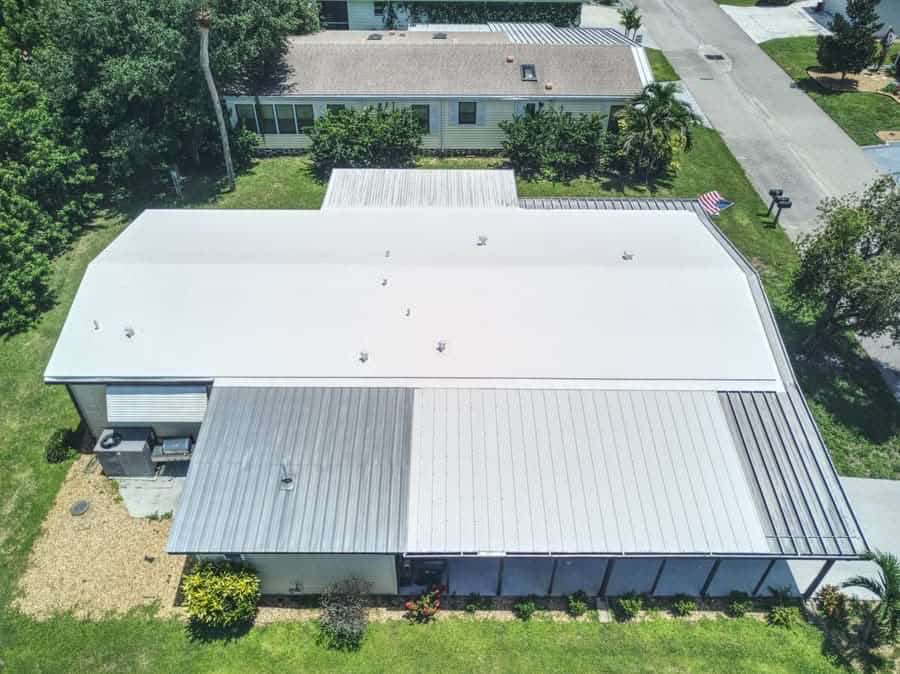
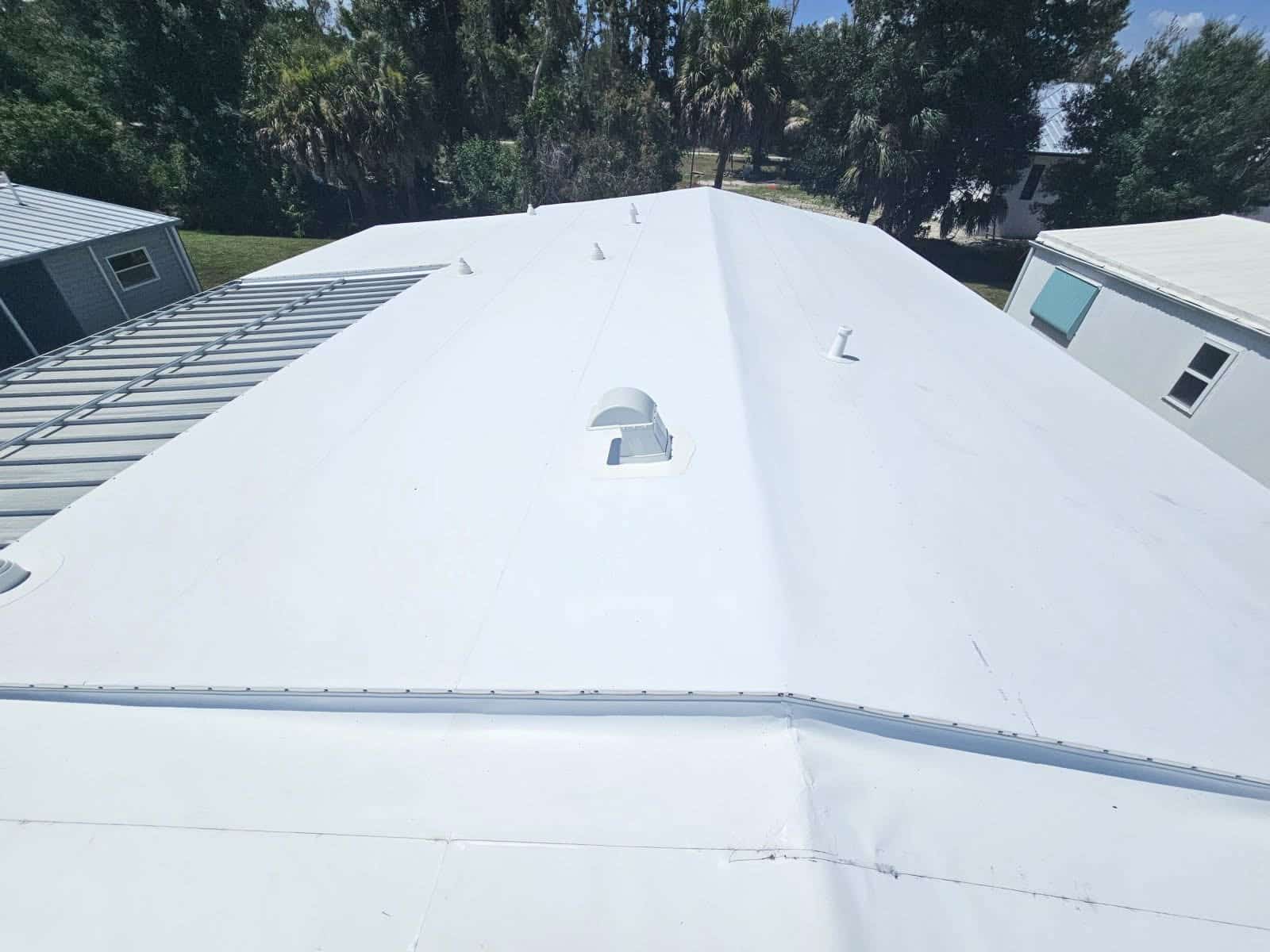
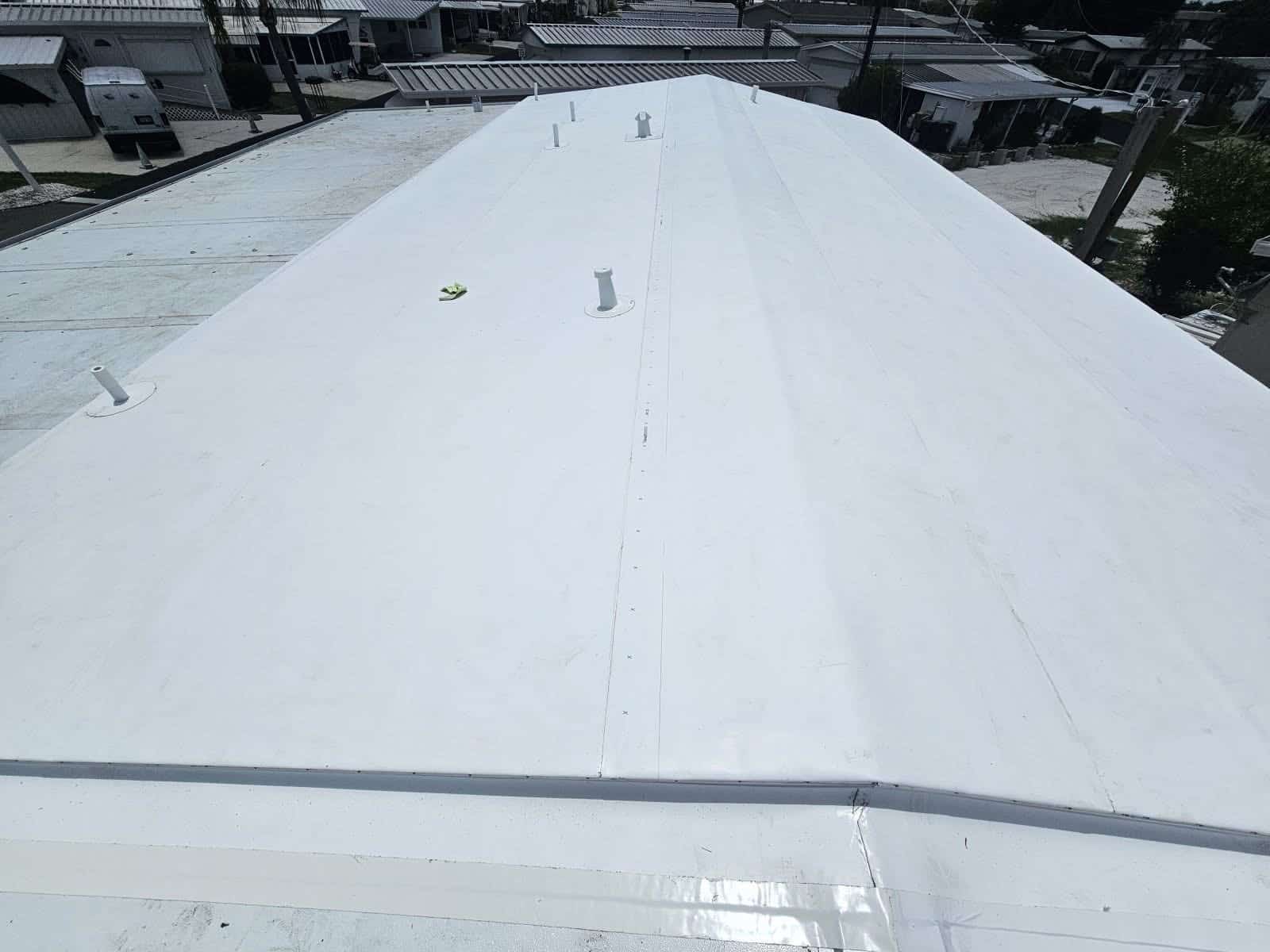
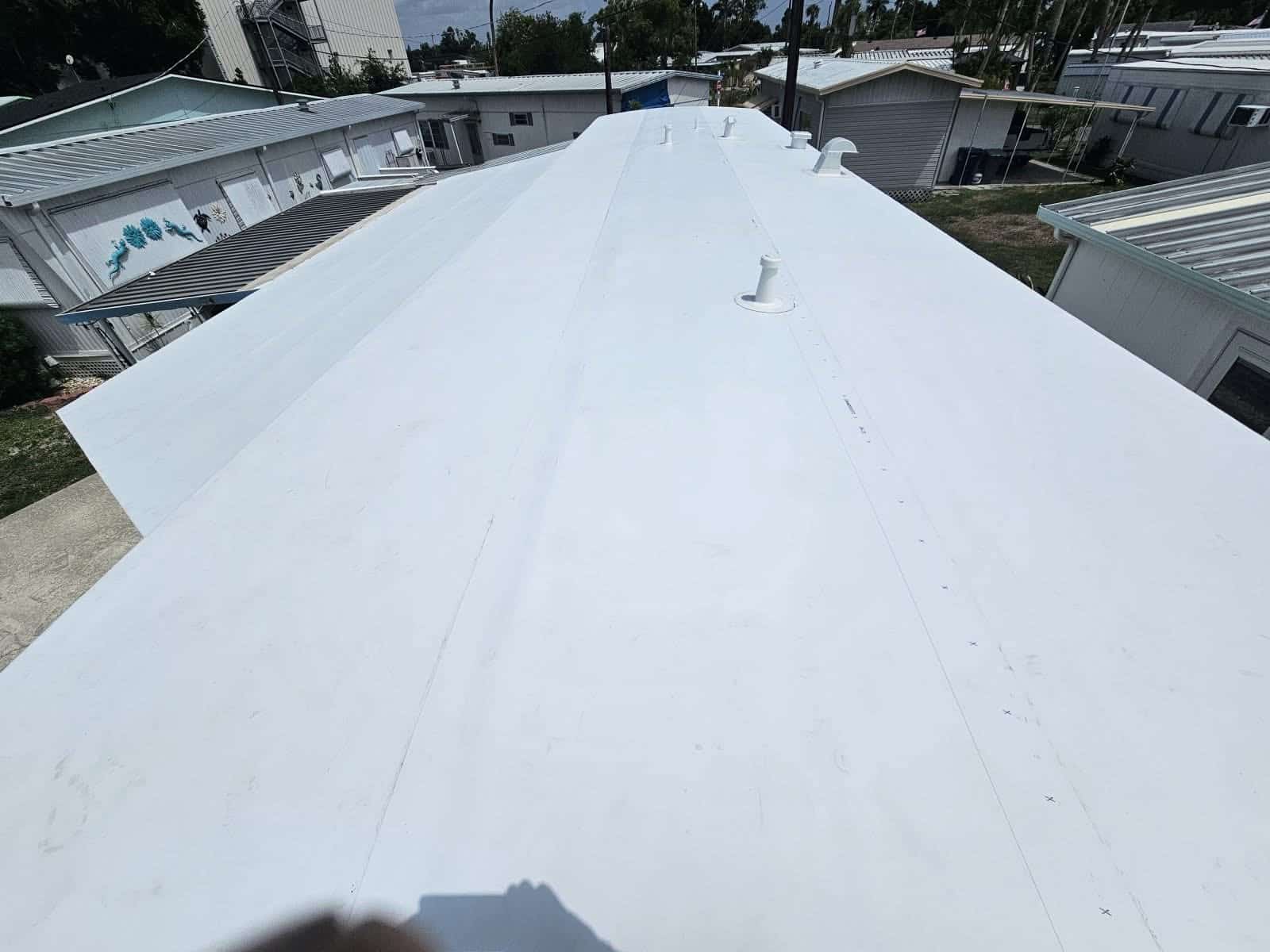
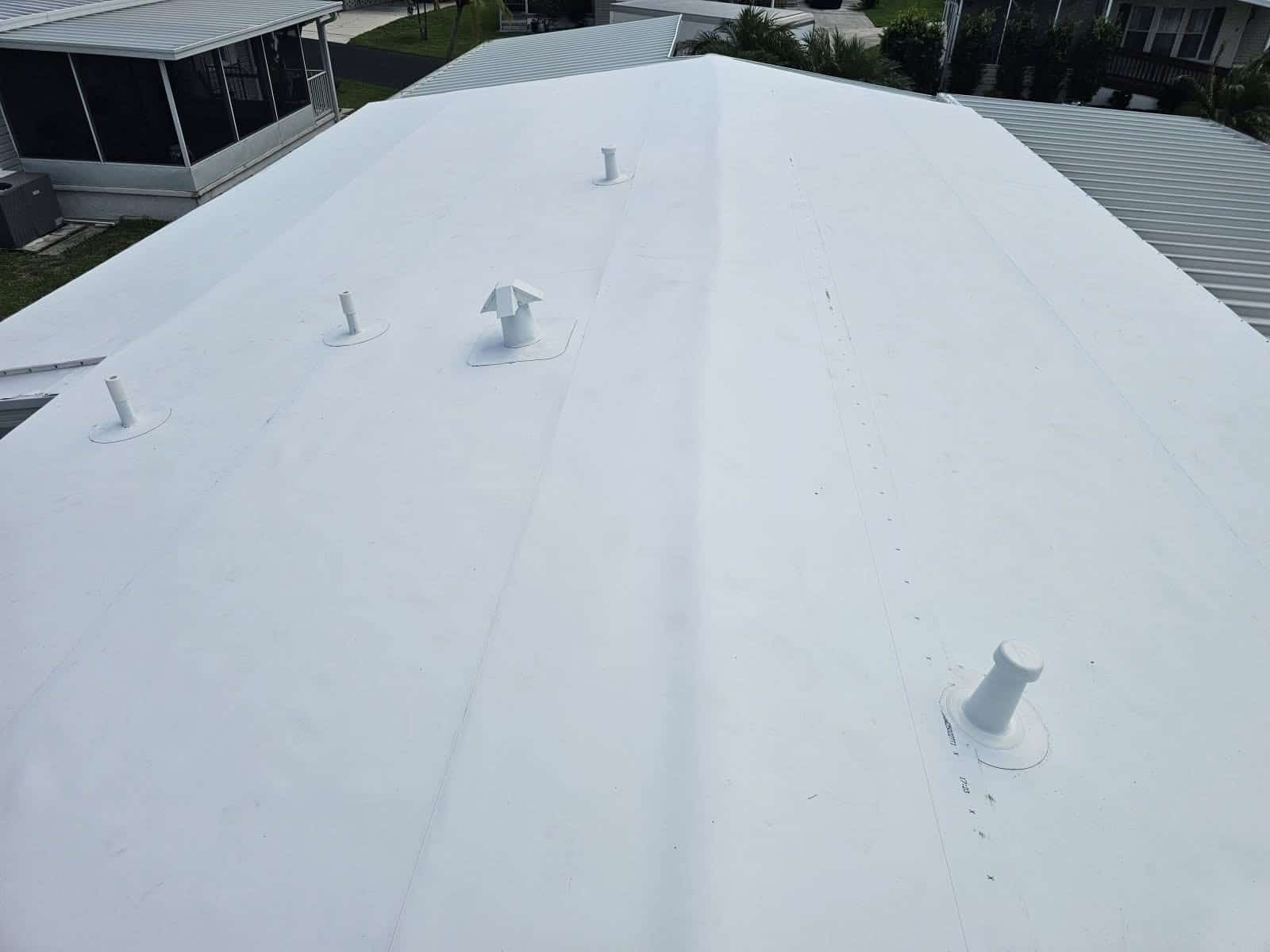
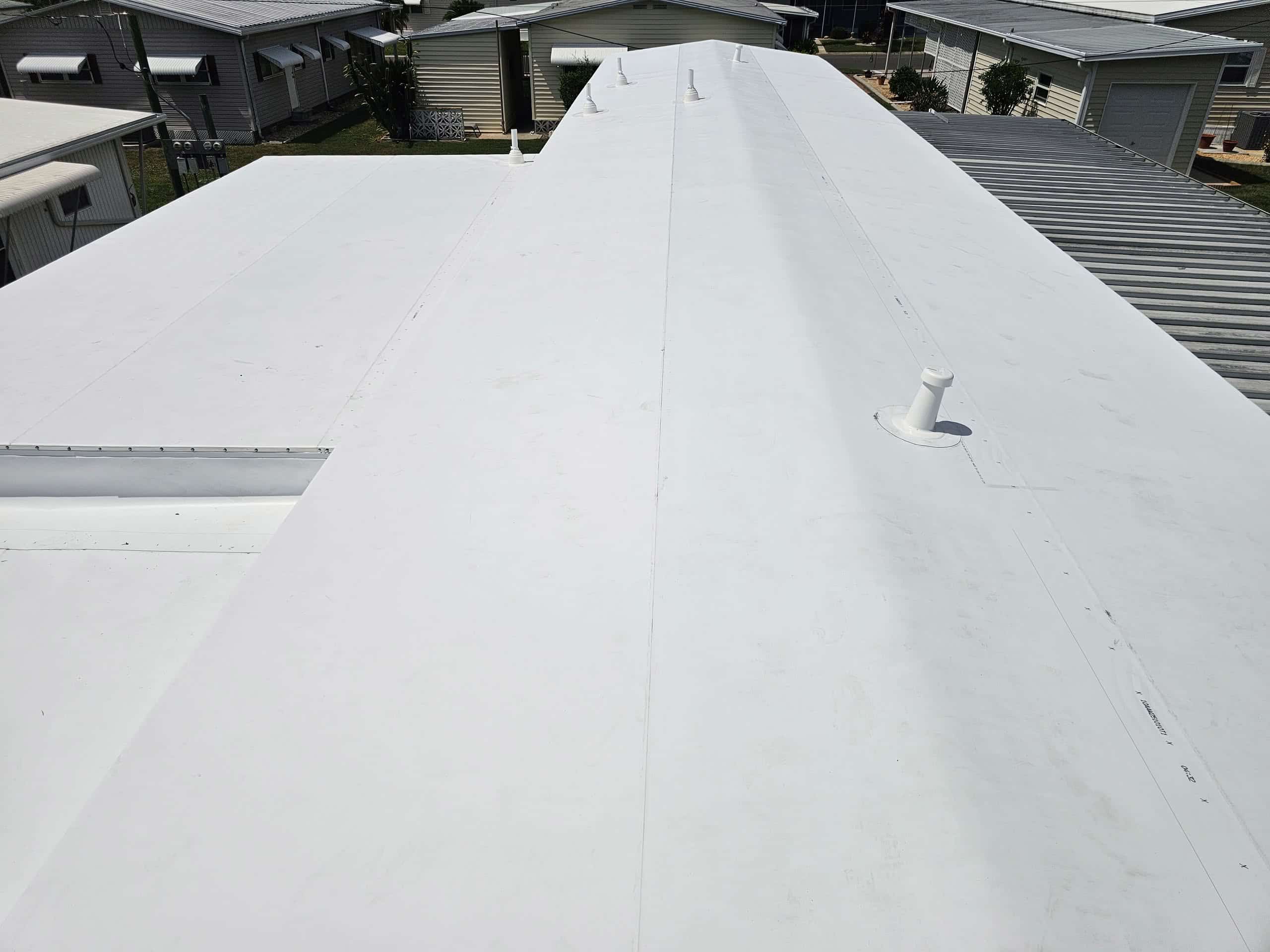
A finished TPO membrane roof on a Florida manufactured home.
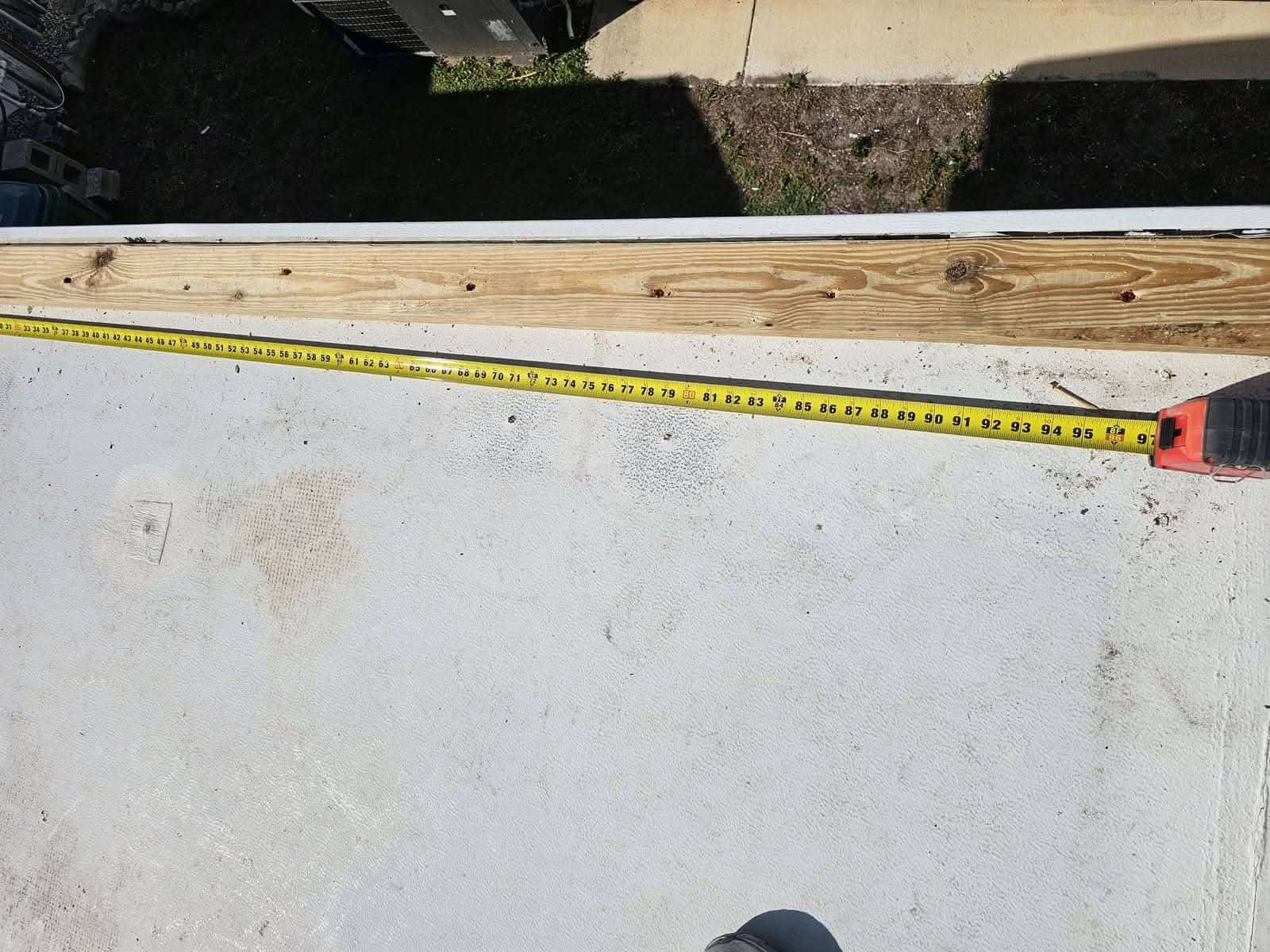
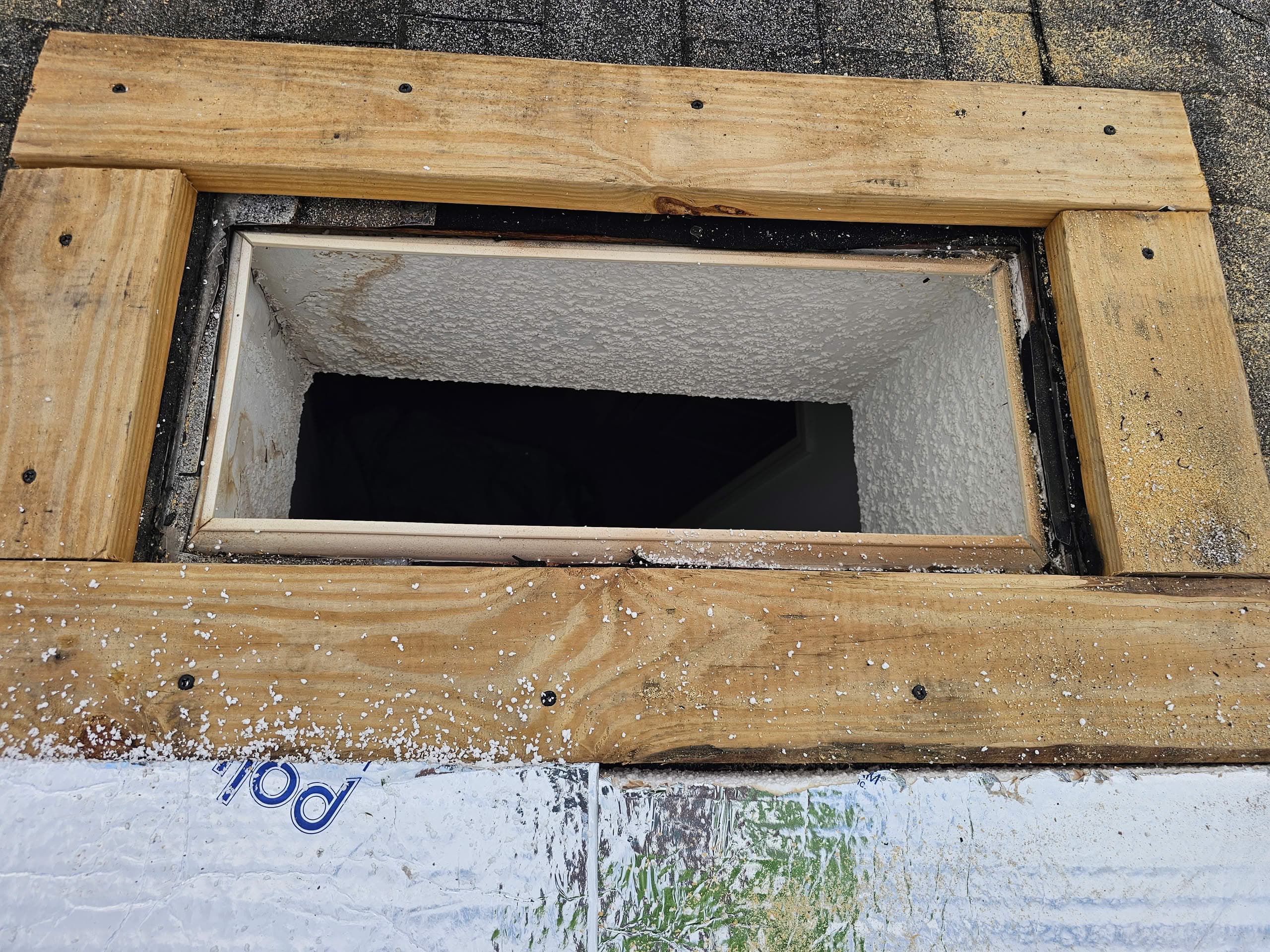
Pressure-treated perimeter framing
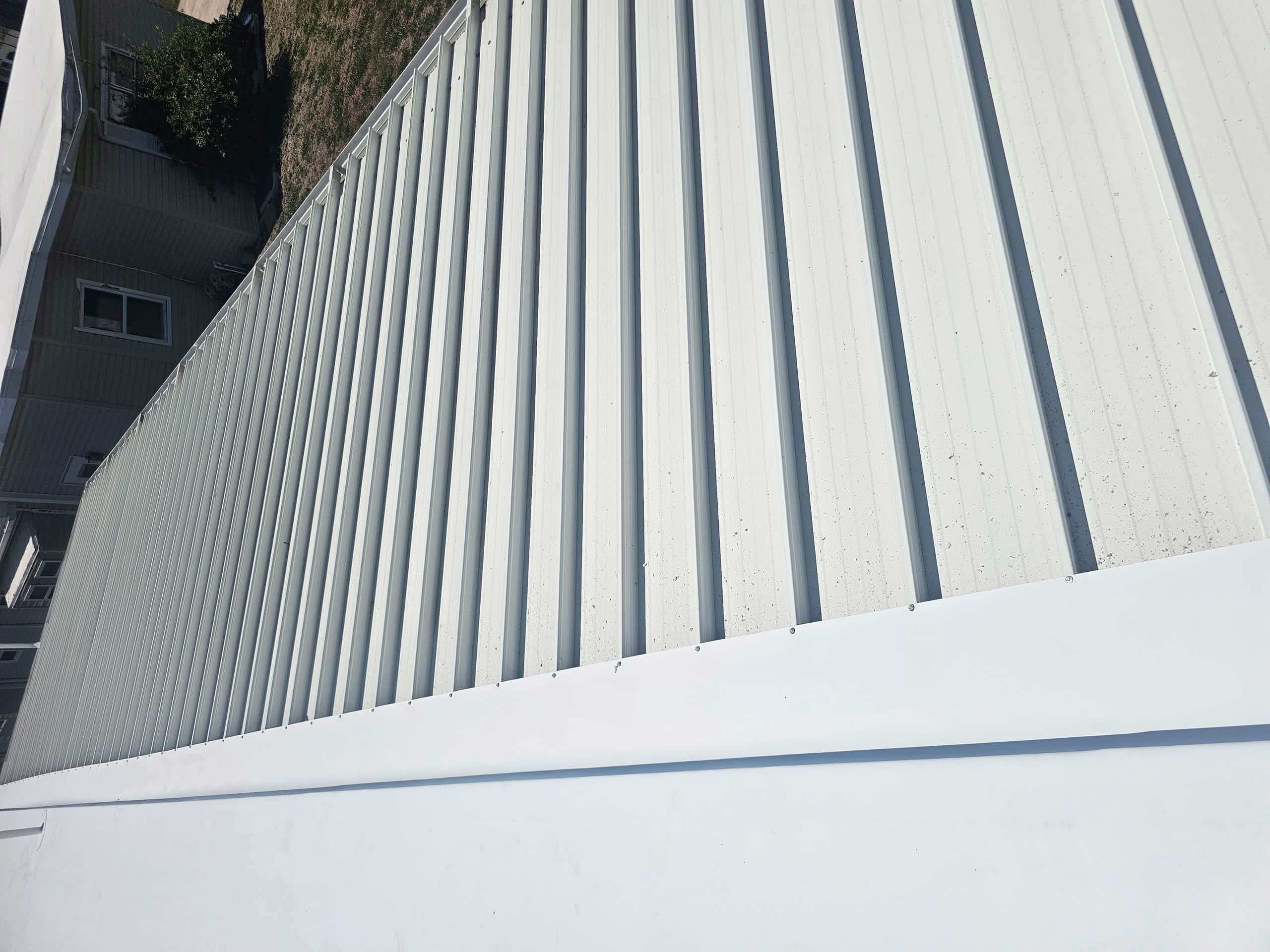
Fully completed TPO system on a gable roof. Covered Main home, Florida room, and shed.
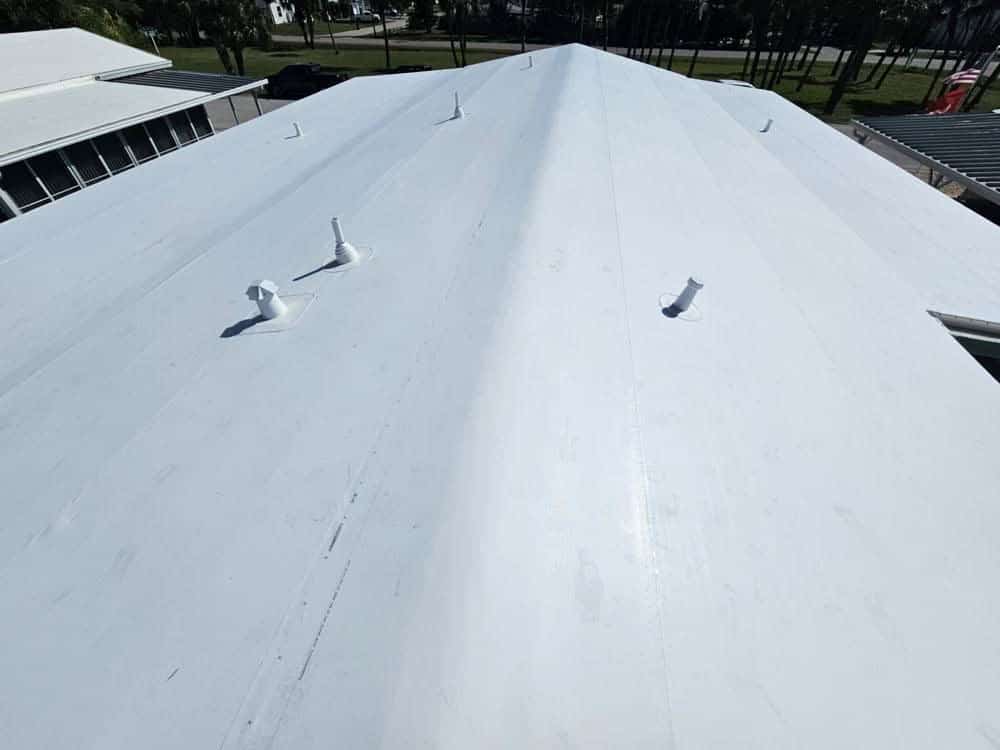
Heat welded seams and vents
Completed TPO roof system with proper breather vents for proper ventilation.
Fully completed TPO roof system with commercial grade one piece welded vents.
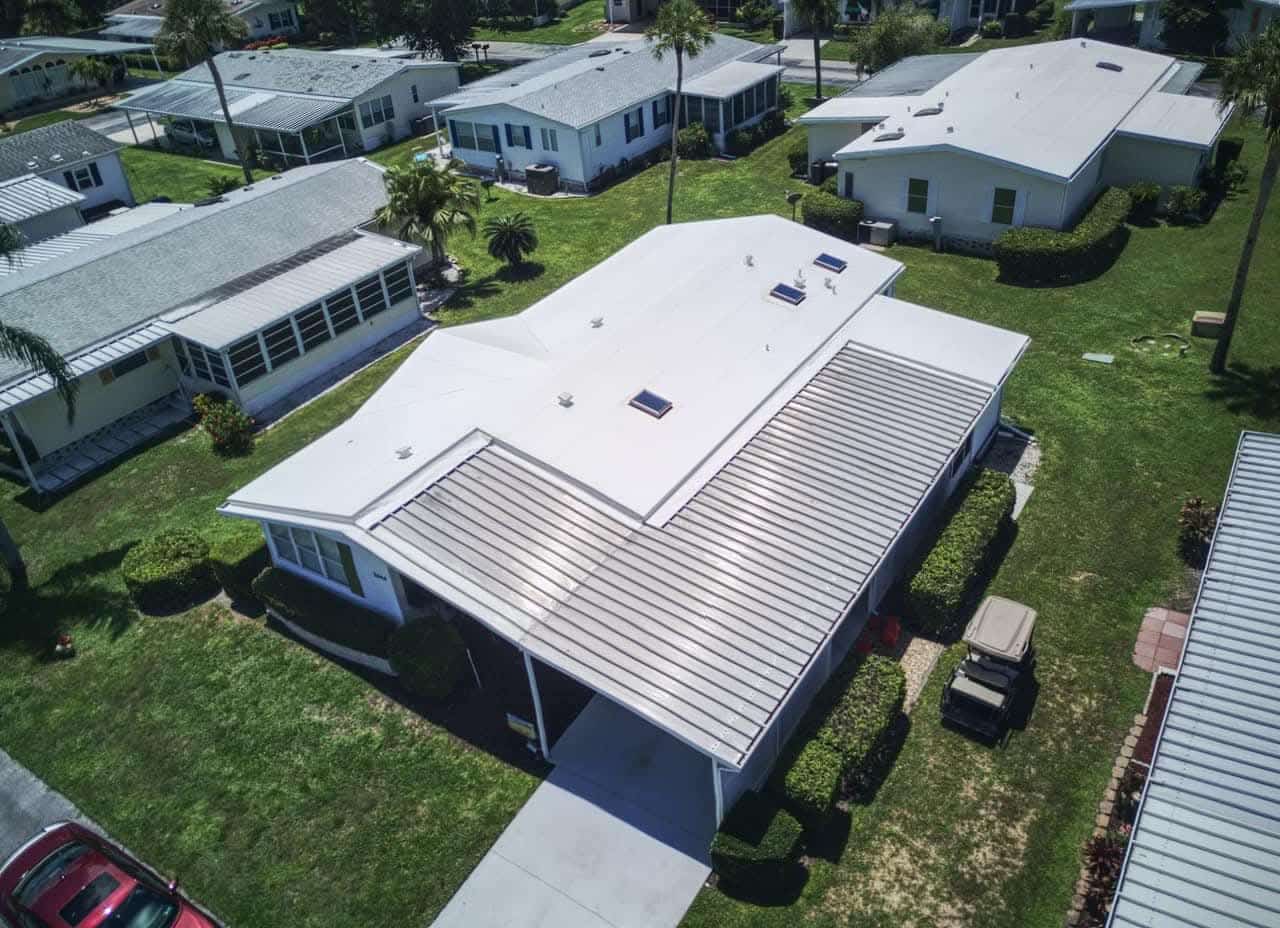
Finished TPO membrane roof on a manufactured home
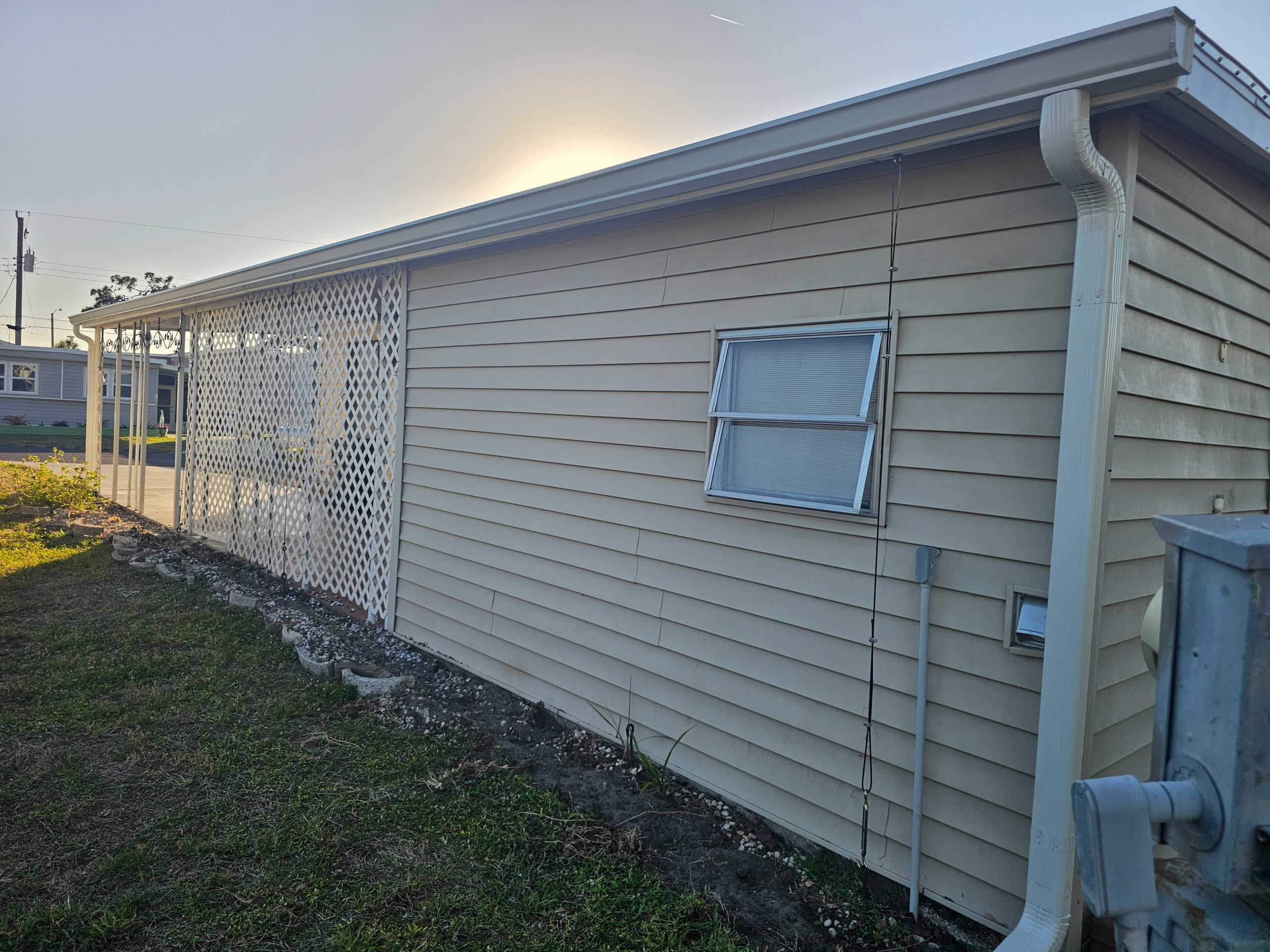
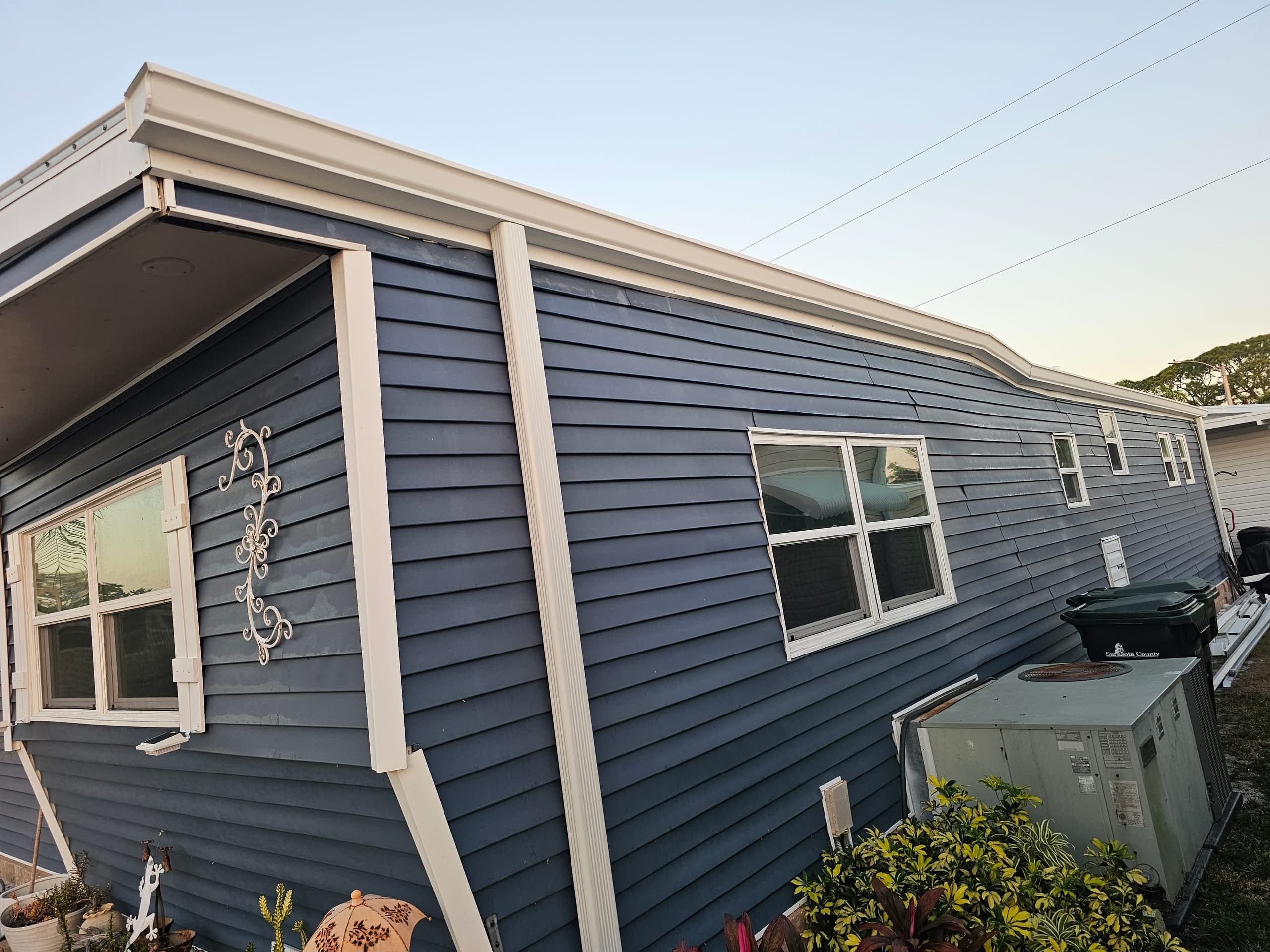
6 inch seamless gutter and 3 by 4 inch downspouts
Install 6 inch seamless gutter and 3″ by 4″ downspouts
TPO flash additions not covered with roof system.
Front and back custom fascia package.
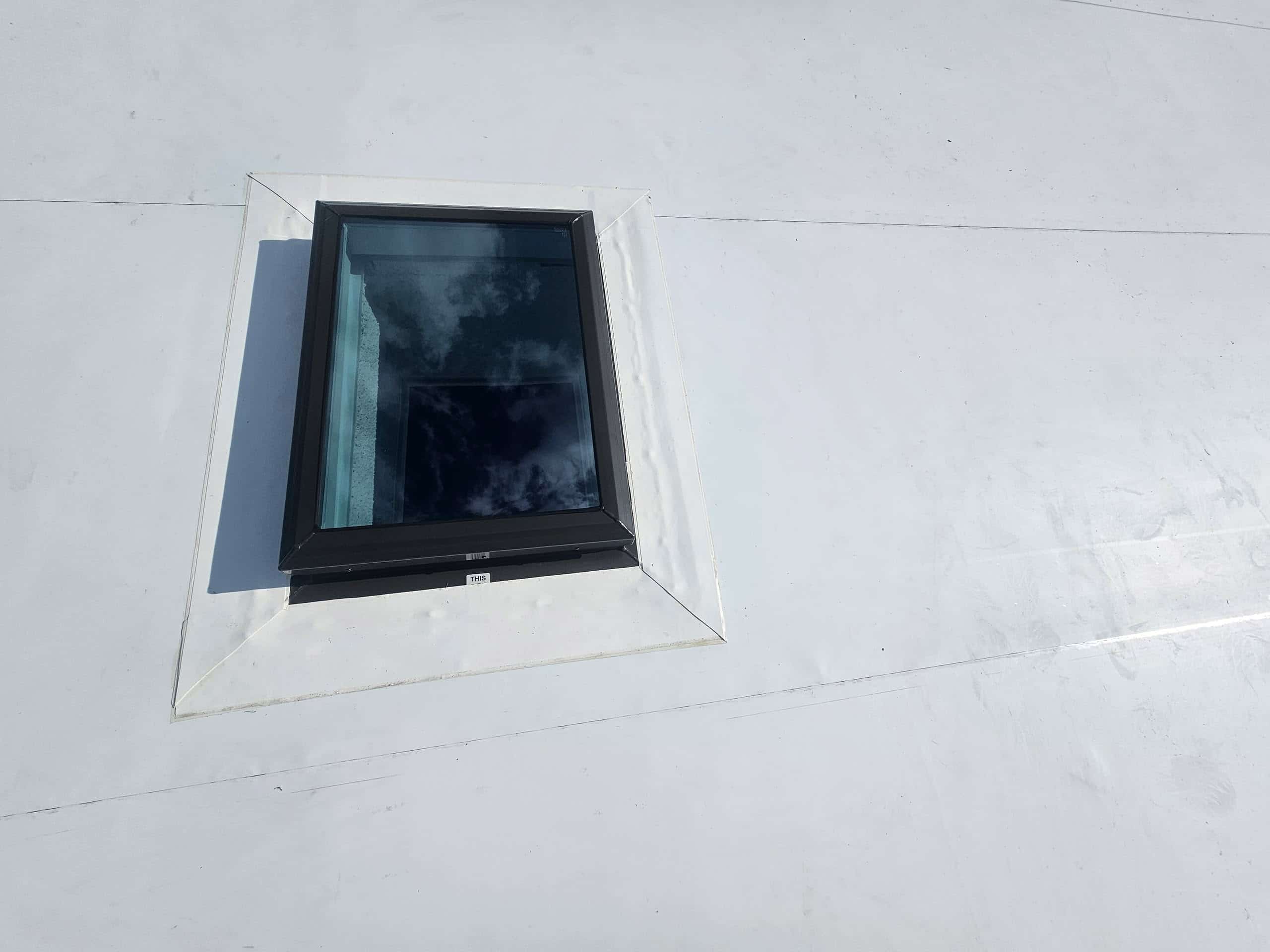
Pressure treated 2″ by 6″ framing for impact rated skylight
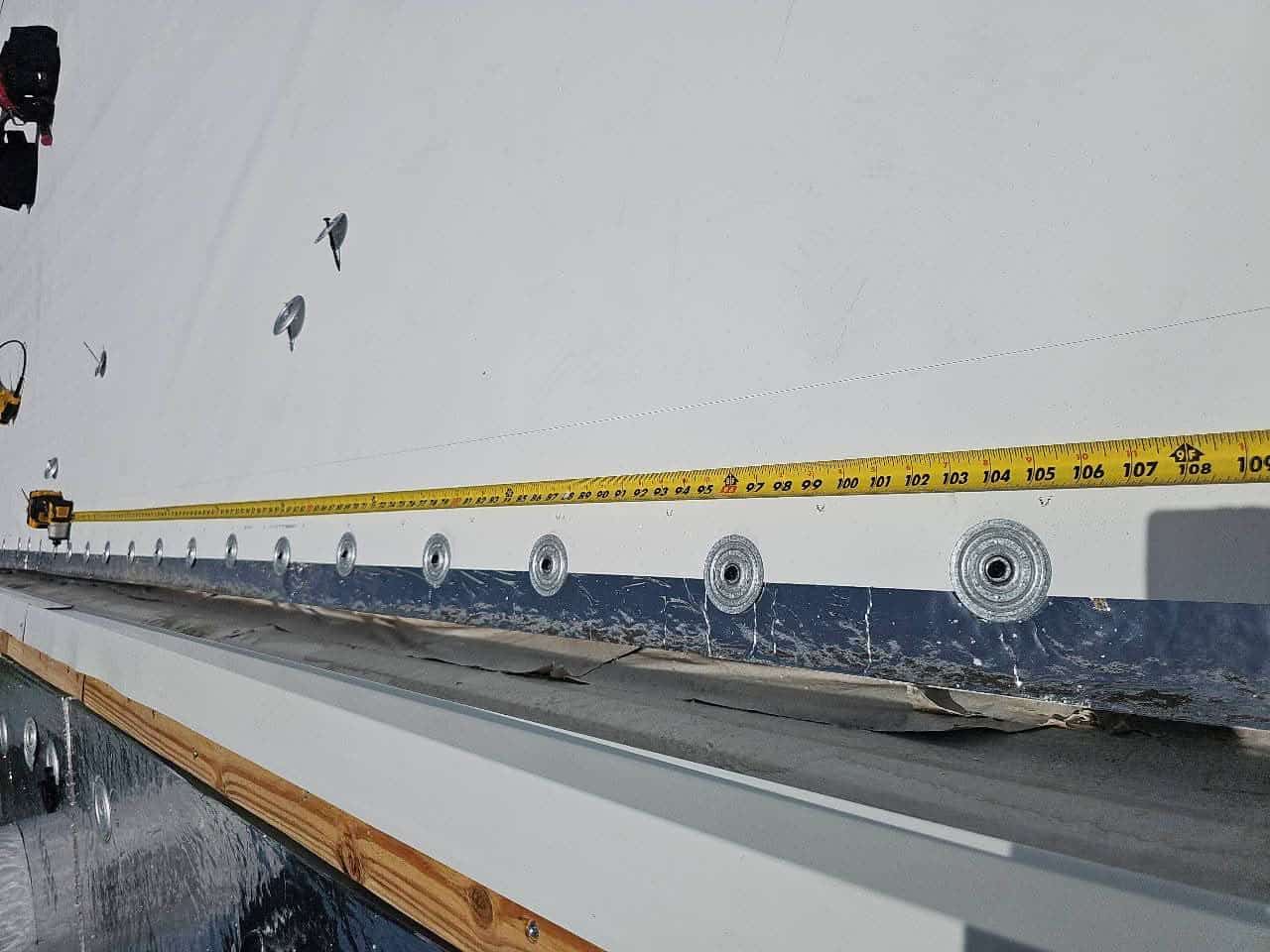
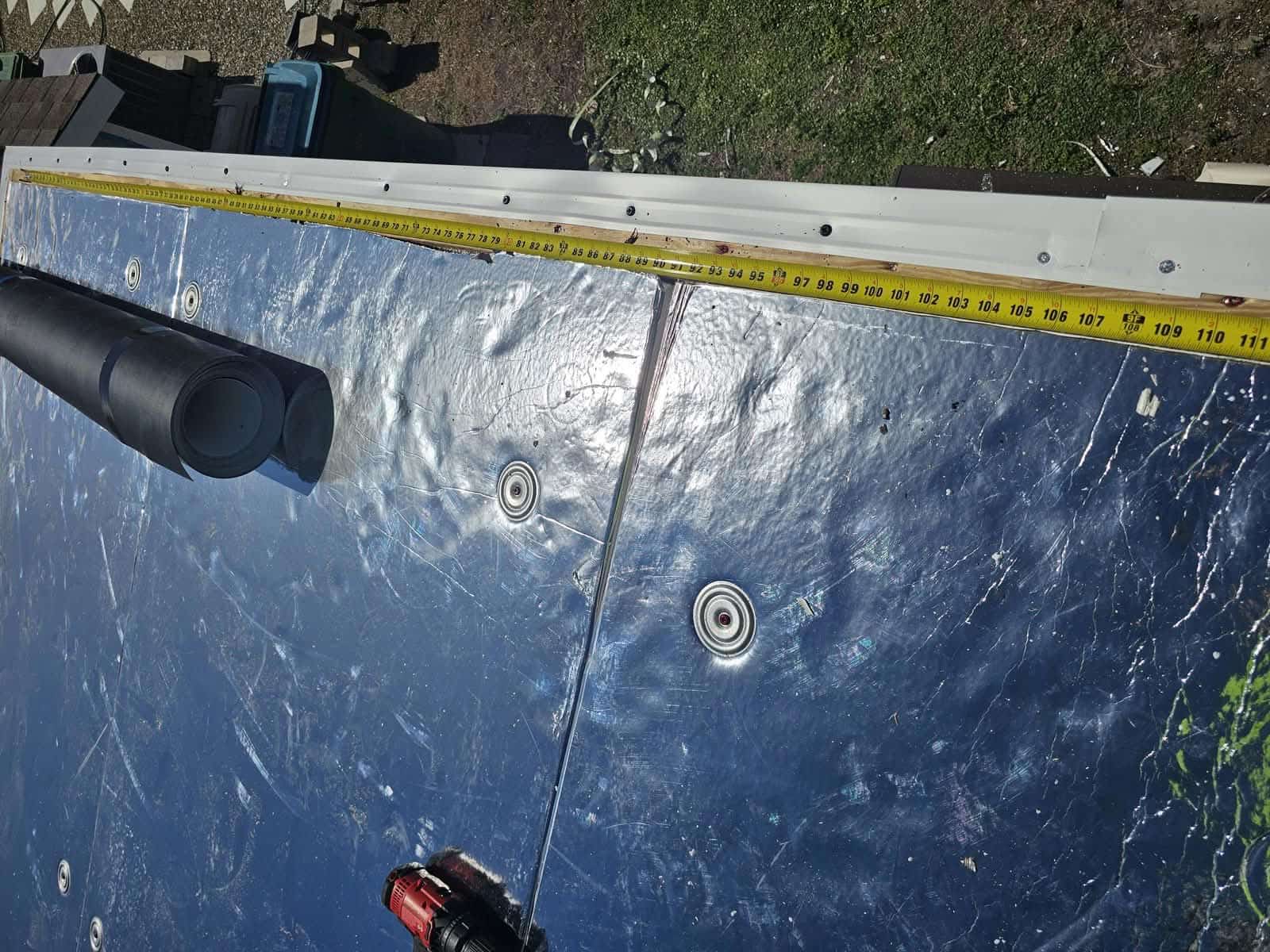
TPO membrane being laid over insulation board
Foil-faced insulation board fastened down
Impact rated skylights. Commercial application.
Step 1 White drip edge over perimeter wood, then TPO over wood perimeter and cut TPO Opening for daylight. #2 Water-Block Mastic under flange. #3 Screw skylight down with 3″ screws then Silicone sealant around flange and screw heads. #4 Apply TPO primer and coverstrip. Triple watertight protection.
Questions
TPO, Answered Straight
Is TPO right for my roof if it isn't completely flat?
TPO is built for flat and low-slope roofs, which covers the majority of manufactured homes. It also performs well on gentle pitches. If your roof has a steep, traditional pitch, shingles or metal panels are usually the better fit — and we’ll tell you which one your roof actually calls for.
Can TPO be installed over my existing roof?
Often, yes. TPO is a common roof-over choice on manufactured homes because a single-ply membrane adds very little weight to a structure that was built light on purpose. Whether a roof-over is appropriate depends on the condition of the deck and structure underneath — that’s exactly what the free assessment determines.
Why is a white roof better in Florida?
A bright reflective surface sends a large share of the sun’s energy back off the roof instead of letting it soak into the structure. On a low-slope manufactured home, where the roof sits directly above your living space with very little buffer, that makes a noticeable difference to the heat load your air conditioner fights all summer.
What happens where vents and air conditioners penetrate the roof?
Every penetration is flashed with the same TPO membrane and heat-welded into the field of the roof. Plumbing vents, A/C curbs, skylights and the perimeter edge all become part of one continuous welded surface — not a patchwork held together with caulk that needs redoing every couple of years.
Does ponding water damage a TPO roof?
TPO is designed to handle standing water, which is exactly why it suits low-slope manufactured home roofs. We still detail the roof to drain as well as the structure allows — a membrane that can take ponding isn’t a reason to leave water sitting on it.
How long does a TPO roof take, and what about my warranty?
Most manufactured home TPO roofs are completed in one to two days, including cleanup and a magnetic nail sweep. Warranty coverage depends on the membrane system and the manufacturer’s current programs — ask about current warranty options during your assessment and we’ll put it in writing with your estimate.
Ready to Stop Chasing Leaks?
Free assessment. Same-day callback. A straight answer from a family-owned crew with 25 years on Florida roofs.