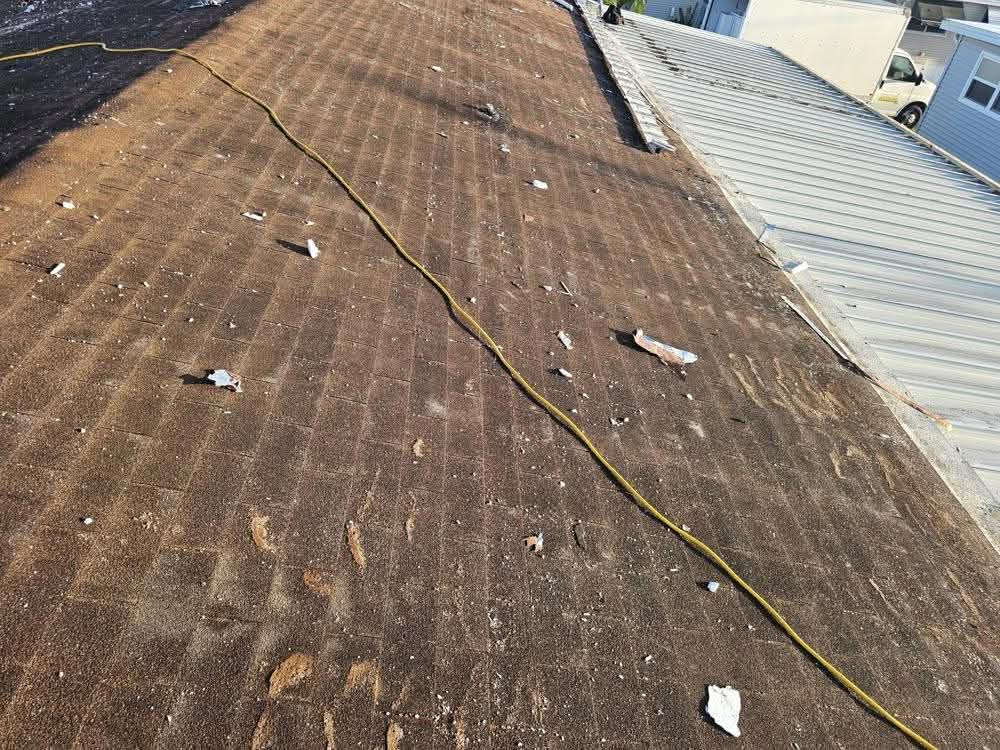
A stain on the ceiling after a summer storm usually leads to one question: is this a mobile home roof repair, or is it time for a new roof? The honest answer depends on where the water is getting in, what the deck underneath looks like, and how much life the rest of the roof has left. Here is how we sort it out on a roof assessment, so you can start sorting it out from your driveway.
Why Mobile Home Roofs Fail Differently
A manufactured home is built in a factory to the HUD Code, the federal construction standard that has covered these homes since June 15, 1976. The roof framing is lighter than a site-built house, the deck is thinner, and most roofs are flat or close to it. That combination changes how a roof wears out.
Water on a low-slope roof does not run off quickly. It sits in shallow spots after a storm, finds the weakest seam, and works on it. Over time a small opening turns into wet insulation and a soft deck. On a steep site-built roof, the same opening might shed water for years before it causes real trouble.
The HUD Office of Manufactured Housing Programs oversees that federal standard. If your home was built after 1976, it has a data plate inside that lists what it was built to, including its wind zone. It is worth finding before any roof work starts.
When a Mobile Home Roof Repair Makes Sense
Plenty of leaks are local problems. If the rest of the roof is sound, fixing the one spot that failed is the right call, and we will tell you so.
- One leak in one place. A single stain that lines up with a vent, a roof jack or an A/C curb usually points to failed flashing or sealant around that penetration, not a failed roof.
- Damage you can trace to one event. A branch strike or a few panels lifted in a storm can often be repaired if the deck under them is still solid.
- A roof with good years left. If the membrane, panels or shingles are holding up everywhere else, a targeted repair protects what you already paid for.
- Loose or backed-out fasteners. On metal roofs, fasteners and their washers loosen and age in the sun. Resetting or replacing them can stop a leak without touching the panels.
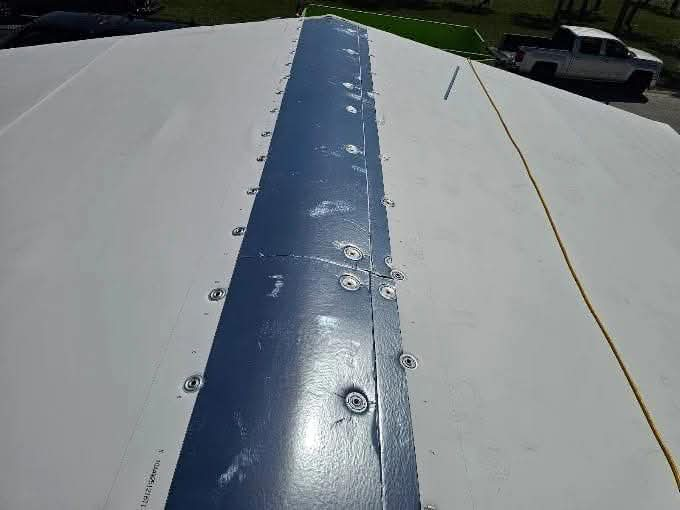
A good repair fixes the cause, not the symptom. Smearing sealant over a wet spot on the roof surface may stop a drip for a season, but if the flashing underneath has pulled away, the water comes back.
Signs It Is Time to Replace the Roof
Some roofs are past the point where a mobile home roof repair will hold. These are the signs we look for:
- Soft spots in the deck. If the roof gives underfoot, the decking below has taken on water. That wood has to come out, and a patch on top of it does not hold.
- Leaks in more than one place, or new ones showing up every rainy season.
- A roof that has been patched over and over. Layers of coating and sealant can trap moisture and hide what is happening underneath.
- Seams that are open along their length, not just at one point. Once glued laps start letting go, they tend to keep going.
- Rust through metal panels, not just surface rust around the fasteners.
- Standing water that sits for days after a storm and seems to get deeper over time.
Any one of these is worth a closer look. Two or three together usually means the roof has reached the end of its service life.
The Middle Option: A Roof-Over
Replacing a mobile home roof does not always mean tearing it off. If the structure is sound, a roof-over goes on top of the existing roof. A TPO roof-over seals a flat or low-slope roof with one heat-welded membrane. A metal roof-over uses a light framing system with panels fastened to it.
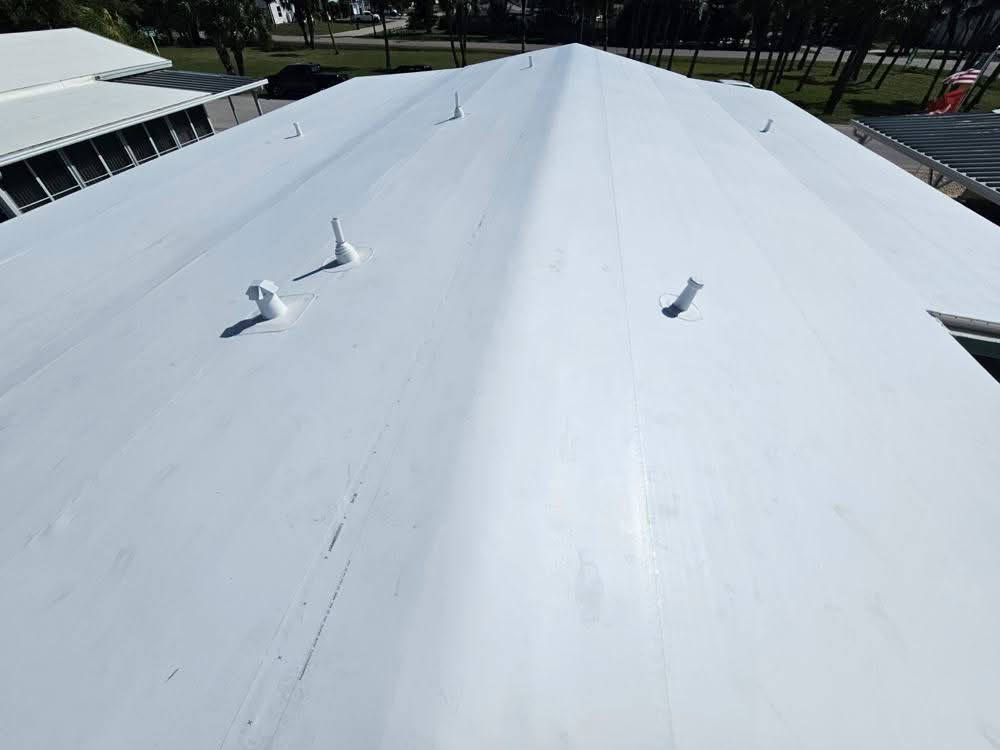
The catch is the word sound. A roof-over is only as good as what it is fastened to. If the deck is soft or the framing has been damaged by long-term leaks, those areas get fixed first, and in some cases a full tear-off is the better path. That is exactly what we check before anything gets quoted.
Weight matters too. A manufactured home’s roof framing was engineered for a specific load, so whatever goes on top has to be light enough for it. That is one reason membrane and metal are the common choices on these homes.
Questions to Ask Before You Decide
- Where exactly is the water getting in, and can you show me photos?
- Is the deck solid under the area you want to repair?
- If I go with a mobile home roof repair now, what else on this roof should I keep an eye on?
- Is my roof a candidate for a roof-over, or does it need a tear-off?
- Will you pull the permit, and can I see your license?
You can look up any Florida contractor on the DBPR license search before you sign anything. Ours is CCC1336896.
What a Mobile Home Roof Repair Assessment Should Include
Whether the answer ends up being a repair or a replacement, the process should look the same. Someone gets on the roof, checks the seams, the penetrations and the edges, probes for soft decking, and photographs what they find. You should get those photos and a written estimate that spells out what is being fixed and why.
That is how our free roof assessment works. If a repair will do the job, the estimate says repair. If the roof needs more, you will see the photos that show why. And if timing is the problem, financing is available for qualified homeowners.
Common Questions
Can I repair a mobile home roof myself?
Resealing around a vent can look simple, but low-slope roofs are easy to damage and hard to read from the ground. Walking on a soft deck can make the problem worse, and a sealant that is not made for your roof material may not bond. If you are not sure what the roof is made of or where the water is coming from, have it looked at first.
How do I know what kind of roof I have?
Most mobile home roofs fall into a few groups: metal, rolled roofing or coated surfaces, single-ply membranes like TPO, and shingles on homes with enough pitch. The photos from an assessment will show you exactly what is up there.
Does a leak always mean I need a new roof?
No. Most single leaks come from flashing and penetrations, and those are usually a straightforward mobile home roof repair. Replacement comes into play when the deck is damaged or the roof is failing in several places at once.
How long does a replacement take?
Most manufactured home roofs we replace are finished in 1 to 2 days, and we dry the roof in the same day we tear off, so your home is never left open overnight.
If you are looking at a stain and not sure which way it is going, call us at (941) 800-8557 or request a free roof assessment. We will tell you straight which one your roof needs.